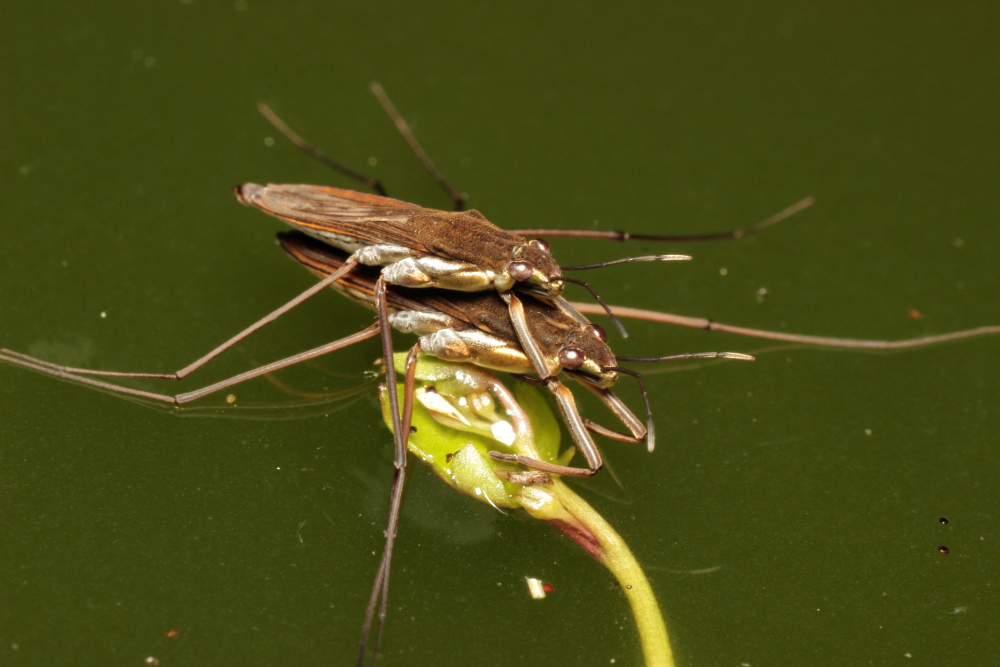
It's hard to say when I got into close up and macro nature photography. My first 'real' camera was an Olympus OM10 (with manual adaptor!) and it didn't take me long to get a set of extension tubes to add to the 50mm and 135mm lenses I'd bought with the camera in the mid 80's. But I was always limited by the cost of film and could only afford to use the occasional roll to go closer than I normally did for my main plant and garden subjects.
 |
| Olympus OM10, T20 flash, extension tubes on 50mm lens. I keep it for sentimental reasons. No reasonable offer refused. |
68mm of extension on a standard Zuiko 50mm lens gives about 1.3:1 of magnification. An insect or flower 25mm broad would occupy the full width of a 35mm frame. True macro territory. But limited by a very short working distance from the front of the lens to the subject and no bracket / off camera cord to bring the flash close to the front of the lens to provide enough light to freeze motion for more mobile subjects.
I'd shoot the occasional butterfly, dragonfly, or larger insect hand held, using the 20 or 36mm tube in the set and exploiting the extra working distance of a 135mm 'close focus' (3ft/0.93m!) lens. The results weren't fantastic though just about good enough to use to illustrate the odd on line article when scanned on my old Olympus scanner. Typically, I've only kept some low res images - but I still have the original slides and could re-scan if needed.
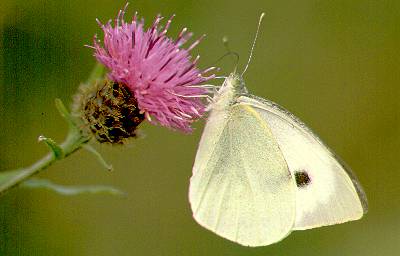 |
| Large white, Pieris rapae, taken in the 1990s |
Then came digital. After a brief dalliance with a Minolta digicam I raided the piggy bank in December 2004 to buy a Canon 300D, the first affordable (sub £1000) DSLR. It was about a year after it came out and prices had almost halved. Once purchased, the incidental cost of shooting is virtually zero so I could finally experiment.
Rather than extension tubes I went for my first macro lens, the Canon 50mm f2.5. It only goes to 0.5:1 (half life size) unaided but can manage 1:1 (life size) with a 25mm extension tube. On the smaller sensor 300D I could shoot at about the same equivalent magnification as with the Olympus gear. Bought used, I had a basic macro set up for less than £200. Results were better than I hoped. The long years of practice handholding and supported with a tripod had obviously had some effect and I was producing shots that I was pleased with.
Shots like these from 2005:
 |
| Phygelius 'Salmon Leap'. 1/100sec, f3.5 |
 |
| Libellula depressa. 1/250sec, f13 |
 |
| Tricyrtis hirta, single flower detail. 1/60sec, f9 |
I was happy for a couple of years. I could capture lots of detail and, more importantly, could keep shooting until I was satisfied that I'd got the shot, something I could never afford to do with film. But it still wasn't quite enough. I needed more working distance for the more active insects and to use longer focal lengths to narrow the field of view and produce smoother backgrounds. I needed off camera flash for smaller insects.
In 2008 I bought a used 400D and 430EX flash. Adding the 25mm extension tube to my previously acquired Canon 28-135mm f3.5-5.6 IS and 80-200mm f4-5.6 II (an underrated lens for a rock bottom cheapo) gave me extra working distance and softer backgrounds but the image quality wasn't up to 50mm macro standards. For all that I got a few decent shots, either tripod mounted or using the flash with a diffuser on the hot shoe.
 |
| Early purple orchid, Orchis mascula. Canon 28-135mm IS, natural light |
 |
Brimstone butterfly, Gonepteryx rhamni. 80--200mm, flash
|
Time moved on and by 2010 I'd invested in a Tamron 90mm f2.8 macro lens together with a Kirk macro flash bracket and off camera cord for the 430EX flash. It all looks a bit ungainly - but the results I'm starting to get after three summer's use are becoming increasingly satisfying. And tripod mounted, the Tamron is great for natural light plant photography.
 |
| 400D, Tamron 90mm, Kirk bracket and 430EX - my relatively low budget macro flash kit |
 |
| Empis livida - a robber fly, taken in 2010 with this kit |
 |
| Lasioglossum calceatum. 2012. I added a 25mm extension tube for this one. |
 |
| An unidentified (as yet) small hoverfly. 2012 |
Of course, I still like natural light - maybe with a bit of fill flash - but that brings its own problems. One budget solution I've tried is the cheap (ish), close focusing 55-250mm f4-5.6 lens combined with a Canon 500D close up filter. By focusing with the zoom ring it runs from about 0.2:1 to 0.8:1, all with a 20in / 50cm working distance. When it works well its surprisingly good - as I'll look at in another post and as illustrated by the shot below.
 |
| Utetheisa pulchella, the Crimson Speckled Flunkey, a day flying moth I photographed in Cyprus with the 55-250 / 500D close up filter combination. |
That has all the requirements of soft light and the clean background that comes from the narrow angle of view inherent in a longer telephoto lens. What it doesn't have is the absolute clarity of a good macro lens / higher resolution sensor combination. Which is why, thanks to a small legacy, I've just upgraded my camera to a Canon 600D and added a used Sigma 180mm f3.5 macro (pre DG) to my lens kit. Another learning curve to be tackled!